How to Choose the Perfect Blog Name (9 Tips and Strategies)


Choosing a great blog name can be a lot of work and keep you from actually getting into the content creation process.
I know from experience that naming my web design business kept me from starting it for months!
Seriously, though, while I wish that wasn’t true (because it’s embarrassing to admit!), I was stuck on the naming process for far too long. And that kept me from dealing with all the other things that needed to get done to actually start a business.
Thankfully, coming up with this blog’s name was a lot smoother. I can’t say it’s been a piece of cake, but at least it didn’t take me months.
Originally, I wanted to use my own name and build a personal brand around it. But someone else had already taken the .com extension for the domain name I wanted.
Even though I could have chosen a .co TLD instead (which I have done for my business’s website – and I love it!), I was afraid that visitors could be confused and potentially end up in the wrong place.
All of this is to say that I can completely relate to those of you who feel stuck before even starting.
The process of choosing the perfect blog name that fits your vision like a glove (but isn’t already taken) can be draining.
In this post, I will give you my best tips and strategies to help you come up with a blog name that you love and one that can evolve as your blogging business grows.
The importance of choosing your blog name wisely
For years, blogging has been a popular way for individuals to express their thoughts and ideas, share their passions, and even grow profitable online businesses.
However, with millions of blogs out there, it can be challenging to stand out from the rest.
Besides the value of your content, one of the key components that will set your blog apart is, of course, its name.
While you’ll eventually want your audience to recognize your brand as a whole, with all that it entails, your blog name is likely the first thing that they’ll come across and, hopefully, remember.
It will determine their first impressions and give them an idea of what you’re all about.
Pin this for later 🙂


6 Tips for choosing the perfect blog name
When you name something, regardless of what it is (a blog, a course, a book, a business…), you’re putting a label on it.
It allows you to talk about it, share it, and reference it. It becomes something that you own!
The issue is that getting to that “it” can take a while.
Should you use your own name? Should you use keywords?
We’ll cover all of that in this post, but first, let’s dive into my best blog naming tips.
1. Understand your blog’s niche and target audience
Before brainstorming any names at all, make sure that you are clear on:
- why you’re starting a blog in the first place,
- what you’ll be blogging about, and
- who you’re targeting.
Identifying your motivations, your niche, and your ideal audience will help guide the direction of the naming process for your new blog.
2. Brainstorm and research
Take the time to brainstorm and list potential names for your blog.
From there, you can start a thorough research to make sure that none of your ideas are already taken or that they aren’t too similar to another blog’s or brand’s name.
The last thing you want is to end up with a name that includes trademarked terms or that can easily be confused with a competitor’s.
Start by jotting down any words or phrases that come to mind when you think of your blog’s focus and purpose.
This can be anything from specific keywords related to your niche to inspirational words. You can use tools like Thesaurus.com to find related terms that you might have not considered.
Additionally, there are several online name generators that you can use to pick up on some ideas. Here are a few of the best blog name generators:
3. Reflect on your brand identity
The right blog name should reflect your brand and what it stands for. Consider words that represent the tone, style, and message you want to convey through your blog.
Some bloggers opt to use blog names that seem completely unrelated to their blog niche and the topics they talk about. But they are often catchy words or short phrases, easy to remember, and, in most cases, a reflection of the author’s personality.
That said, using keywords related to your blog’s topic can be a good idea too.
While these days, this strategy doesn’t influence rankings as it once did, it can still be useful.
Using strategic keywords in a blog’s domain name makes it easy for visitors to understand what that blog is about from the get-go.
4. Make it memorable
The best blog names are easy to remember and pronounce, so people can easily find those blogs again and recommend them to others.
While it can be tempting to choose a clever or made-up name, it’s important to remember that simplicity is key.
Opting for a complicated blog name or coming up with creative blog names might make it more difficult for people to find your blog again!
5. Future-proof your blog name
While it’s important to have a specific focus for your blog, and, as we’ve seen above, you may be tempted to add your best keywords to your blog’s name, try not to limit yourself to too narrow or niche-specific name ideas.
Unless, of course, you are absolutely sure that’s the topic you’ll continue to write about for the next several years.
Otherwise, understand that your blog may evolve and grow in the future.
Choosing a name that allows you to pivot and that can be suitable for any new topics you may introduce, is beneficial in the long run.
For example, ecommercepro.com could be a limiting choice.
While e-commerce can definitely take in plenty of sub-topics, and you could run a profitable and valuable blog about e-commerce indeterminately, ask yourself these questions:
- Will you be able to maintain a regular posting schedule solely on that topic, without getting bored?
- Wouldn’t you occasionally (or eventually) like to talk about other digital marketing specializations?
When in doubt, your best bet is to reconsider.
While you could still write about other subjects, such as email marketing or website development (which are both related to the e-commerce niche), your readers will always see you as the “e-commerce expert”.
If you suddenly come up with a series of articles about podcasting, you could potentially draw them away.
However, if you had chosen a name like digitalmarketingpro.com instead, you could still have a clear focus on e-commerce but venture into other directions whenever you pleased.
Note that these names are fully made up, and I haven’t really checked whether those websites exist or not. 🙂
6. Keep it simple
You want your new blog name to be short and to the point.
Ideally, the name that you end up choosing should follow these guidelines:
- 4 words or fewer
- 12–15 characters in total
While these “rules” aren’t set in stone, and it might not always be possible to achieve them, it’s still good to keep them in mind during your brainstorming sessions.
Also, make sure the name you choose is easy to say and spell.
Try it yourself! Read it out loud or ask someone else to say it, so you can hear how it sounds outside your own head.
The idea is to come up with a simple blog name that is easy to understand and remember.

This post contains affiliate links, and I may earn a commission (at no extra cost to you) if you make a purchase after clicking one of those. I only recommend resources I use and love! Read my full disclosure.
3 things to check before naming your blog
1. Other brands, products, or companies
Once you’ve come up with a few name ideas, and before making the final decision, do a quick Google search to check if someone else is already using the same (or a very similar) name.
Even if the .com domain name is available, the last thing you need is to compete against a bigger and more established brand, especially if you’re just getting started as a new blogger.
The name of your blog should stand out, be memorable, and unique.
Avoid generic or commonly used words, as these can make it harder for readers to differentiate your brand from others.
Also note that while the domain you need may be available, other brands could already be using your name idea for one of their products or courses, for example.
It isn’t uncommon for brands to trademark these types of assets, even if they haven’t locked the corresponding domain names.
2. Trademarks and Legal Considerations
Check for potential trademark conflicts to avoid any legal issues in the future.
Although I am currently based in Spain, and I’ve registered my brand name here, since I blog in English, I also like to run any potential name ideas by both the United States Patent and Trademark Office, and the UK’s trademark database.
When it comes to blogging, your audience is potentially spread across the globe. Better to be covered on all fronts! This isn’t legal advice. It’s only something you might want to consider finding more information about.
I know that when I first started blogging in 2017, the last thing I thought of was registering my blog’s name. That didn’t cross my mind for a millisecond!
That’s why I like to bring this up so that you can keep it in the back of your mind if you’d like.
As you navigate the idea of starting a blogging business, I recommend that you consider taking this free legal course designed specifically for bloggers.
And if you want to take things to the next level, Lucrezia has a complete legal bundle as well, which covers everything you need to start blogging legally and stay on the right side of the law.
3. Domain Name and Social Media Handles
Before you settle on a name for your new blog, make sure that the corresponding domain name and social media handles are available too.
Use online tools like namechk.com to check availability across multiple platforms.
If you find a great name – that you like and that is available – I strongly encourage you to register it right away. We’ll go over the process at the end of this post!
Still on this note, also pay attention to how the name looks and reads when the words are put together without spaces (as happens in both the domain name and the social media handles you’ll get).
Can you spot any ambiguities that may be awkward?
Here are some examples of unintentionally inappropriate domain names:
- www.childrenswear.co.uk
- www.expertsexchange.com
- www.speedofart.com
Blog name ideas and different naming strategies
If at this point you haven’t come up with a blog name that resonates with you and your brand, here are some naming strategies and examples that might help:
Brandable Name
A brandable blog name is unique and memorable, often created by combining words or using made-up words.
Examples of blogs and websites using this naming strategy:
- Nike (shoes)
- Rolex (watches)
Descriptive Name
Descriptive names clearly explain what blogs are about and make for great blog names.
Examples of blogs and websites using this naming strategy:
- The Savvy Couple (finance)
- The Blonde Abroad (travel)
Personal Name
Using your own name as your blog name can add a personal touch and make it easy for your readers to connect with you.
Also, by using your own name, you allow for ultimate flexibility in terms of the type of content that you produce, making it easier to pivot if/as needed.
Examples of blogs and websites using this naming strategy:
- Melyssa Griffin (business)
- Jenna Kutcher (digital marketing)
First Name + Verb/Noun
Combining your first name with a verb, noun, or adjective can create a catchy and unique blog name.
Examples of blogs and websites using this naming strategy:
- Helen in Between (lifestyle)
- Nomadic Matt (travel)
Niche-Specific Name
A niche-specific name focuses on a specific topic or area of interest, and it can help attract a dedicated audience.
However, when going this route, consider that it can become highly challenging to pivot into other topics if you ever want to do that in the future.
Examples of blogs and websites using this naming strategy:
- Taking Cara Babies (health & wellness)
- World Travel Family (travel)
Alternative Spelling
You can also consider using alternative spellings or variations of words to create a unique blog name.
However, I do have to say this isn’t my favorite approach, and it’s one of the biggest mistakes I made in my business at first. I chose an alternative spelling because the word I wanted to use was already taken, and frankly, I thought the alternative looked cool.
The problem was that not even my closest friends could ever remember my URL, and everyone had a hard time understanding why I decided to go with that name. It took me less than a month to regret that decision and change my mind…
Unless you’re already famous, give it serious thought before moving forward with this option.
Examples of blogs and websites using this naming strategy:
- Fiverr (marketplace)
Alliterations
Using alliterations, or words that start with the same letter, can make for catchy blog names! These are usually easy for people to remember, too.
If you can come up with something unique, this is an excellent option.
Examples of blogs and websites using this naming strategy:
- Cupcakes & Cashmere (lifestyle)
- Seeking Stamps (travel)
Combining Words
Combining two or more words can result in a unique and catchy blog name, too! I love this strategy, and you’ll find many popular brands using it.
Examples of blogs and websites using this naming strategy:
- Blogilates (fitness)
- Fitnancials (finance)
Short Phrase
Going with a short phrase can also be an excellent choice for a blog name, as it is easy to remember and can quickly convey the overall theme or purpose of your blog.
While this can result in a longer domain name, I wouldn’t say that’s a bad thing in this case.
Examples of blogs and websites using this naming strategy:
- Making Sense of Cents (finance)
- Two Peas & Their Pod (food)
Wordplays
Puns can add a touch of humor and playfulness to your blog name!
Examples of blogs and websites using this naming strategy:
- Love at First Flight (travel)
- Baking the World a Better Place (food)
As you see, there are endless possibilities when it comes to choosing the perfect name for your blog.
The key is to find something that resonates with you and your brand, while also being memorable and unique.
Don’t be afraid to play around with different ideas, related words, and combinations until you find the best fit.
How to Register a Blog Name to Start a New Blog
At this point, you might already have a few ideas popping into your head. If you’ve gone through the process I’ve suggested above, it’s time to take the next step and guarantee nobody else can take that idea away.
Are you ready to register your domain name and jumpstart your blogging journey? Here’s what we’ll do next:
Research available domain names
Even if you’re not ready to start your blog quite yet, it’s worth securing your blog name as soon as possible.
First, you have to make sure that the blog name you’ve chosen is available as a domain. You can confirm availability by searching for the desired name on a domain registrar website such as Namecheap or directly with a website hosting provider.
Domain names usually sell for $15-20 per year. They are affordable! And that makes it a no-brainer to register the domain as soon as you’ve come up with the right name for your blog.
The last thing you want is for someone else to grab it first and to have to go through the entire process again!
Set up web hosting
If you’d prefer to dive right into blogging and keep everything under one umbrella, most web hosts offer domain registration too, and it’s often included in the web hosting package.
For hosting, I recommend Lyrical Host or BigScoots. If you’re on a tight budget, you can also consider A2 Hosting or Hostinger, for example.
Which web hosting provider you choose to start with, comes down to budget and personal preference. Your blog will be in good hands with either one of these.
Of course, not all hosting plans are built the same, but as you start a new blog you won’t probably need all the bells and whistles. And, if needed, you can change hosts or upgrade to a higher-tier plan later on.
That being said, Lyrical Host is the hosting provider I use for most of the websites I build, and it’s definitely my favorite, both in terms of features, community, and support.
Although domains are purchased separately, Lyrical Host makes it effortless to build a blog, and they lock in your rate forever, so there won’t ever be any surprises when it comes to pricing.
They also have an excellent support team full of WordPress and blogging experts who are happy to step in whenever you need a hand. Plus, they include monthly drops of free resources that you can use: stock photography, Canva templates, blog post ideas, and more!
If you love them too, use the coupon code I have set up for you. It’s BLOG! (Yup, just type the word BLOG at checkout to get 10% off your first billing period!)
Get to blogging!
Once you have settled on a good name, purchased its corresponding domain and a hosting plan, you can get right into WordPress.
The first thing you’ll need to do is install a free theme from the WordPress library, or choose a premium theme instead. But you’re basically ready to start your blogging adventure right away.
Congrats on taking this important first step!
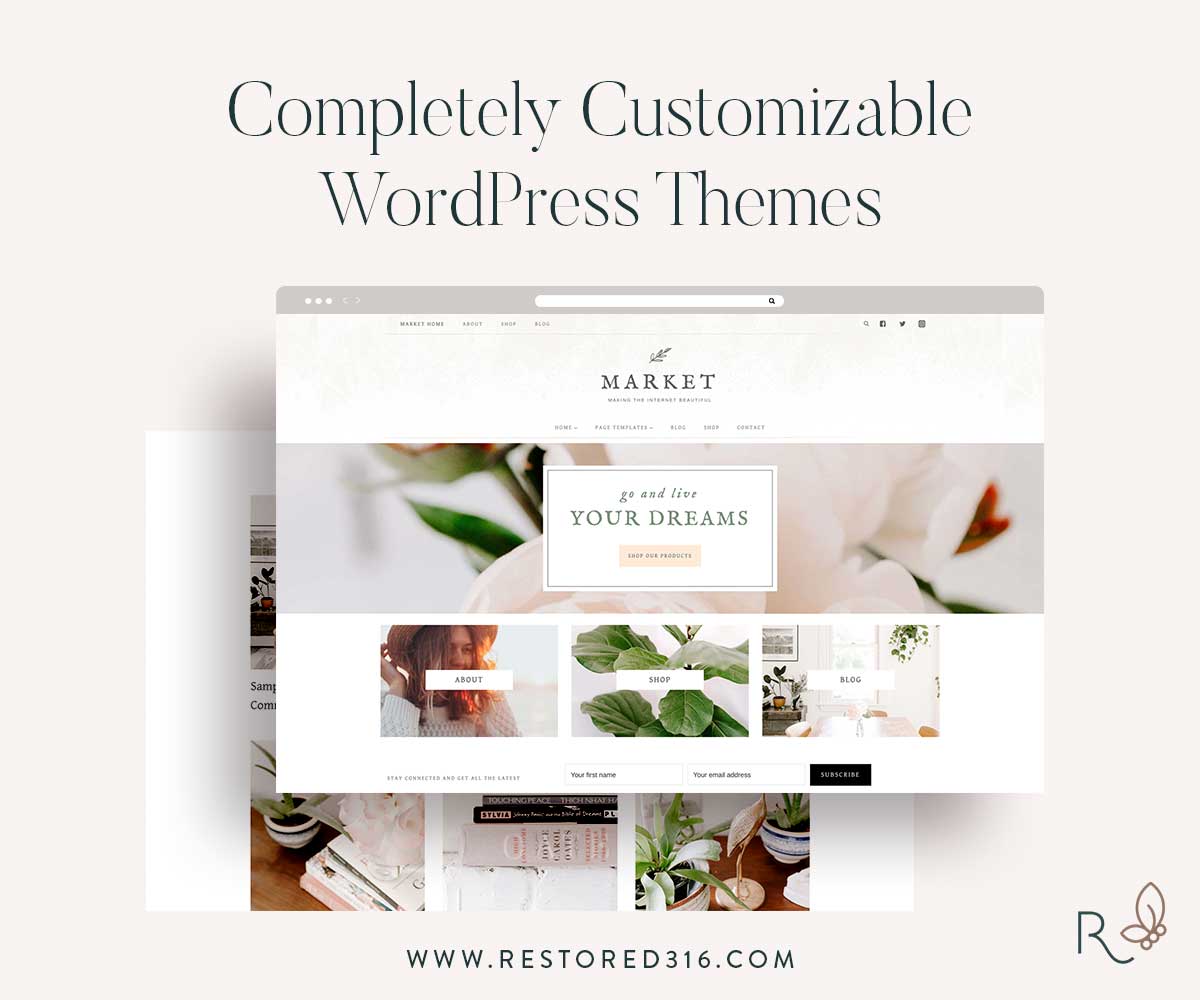
Here are some blogging theme designers worth checking out:
- Restored 316,
- 17th Avenue,
- Pix & Hue, and
- Bluchic.
And if you need help navigating the whole process of setting up a blog on WordPress, check out my step-by-step guides, below:
- How to Start a Blog – this article goes over everything you need to get started and includes a fillable checklist to help you along the way;
- How to start a blog with Lyrical Host – this tutorial covers the technical aspects of setting up a self-hosted WordPress blog with my #1 recommended host.
Have you decided on your blog’s name yet? Share your ideas in the comments!