
Blogging in English for Non-native English Speakers


Are you wondering if you should start a blog in English as a foreign language, or if you should write in your mother tongue instead? Do you want to know what other bloggers have to say about it?
I was curious, too. So I asked 3 successful bloggers about their journey, and they have shared their best tips on blogging in English for non-native English speakers.
I’ll be honest, I was planing to briefly mention this topic in a blog post about beating imposter syndrome as a blogger. But since language skills are one of my biggest concerns when it comes to serving a global audience as a European blogger, I wanted to know others’ opinions too.
Although I follow many non-native English-speaking bloggers myself, and I was never bothered by the occasional language mistake, I wondered if that’s because English isn’t my first language either. I often ask myself what native speakers think about consuming content created by foreigners.
So I went ahead and contacted a few industry colleagues about their years of experience as international bloggers serving a predominantly American audience.
And I am so glad I took the time because their answers offer real insight into the world of non-native English-speaking content creators.
This is a topic that touches one of our greatest fears when it comes to starting a blog or launching an offer to an international audience. And I don’t think it’s talked about enough.
We are all used to consuming content from American creators, and we often forget that there are millions of high-quality websites running from so many other countries all over the world.
This post contains affiliate links, and I may earn a small commission (at no extra cost to you) if you make a purchase. I only recommend resources that I use and love! Read my full disclosure.
3 Pro Bloggers Share Their Insights About Blogging in English for Non-native Speakers
If you want to read about these bloggers’ best advice, you really have to keep scrolling!!
But first, here’s a brief introduction to the bloggers who were so kind to share their stories and insights.
Lucrezia Iapichino | Blogging For New Bloggers, Tiny Love Bug and Legals For Business Owners
Dr Lucrezia Iapichino is the founder of BloggingForNewBloggers®, Tinylovebug®, LegalsForBusinessOwners™ and host of the popular Blogging for New Bloggers® community (35K+ members).
Originally from Italy, Lucrezia has worked as an international lawyer and university lecturer in different countries and is currently based in Melbourne, Australia where she lives with her husband, Sam and their little daughter, Violet.
She has been blogging for nearly seven years, making $20,000+ a month. Lucrezia has helped over 30K+ bloggers, content creators, course creators, coaches, podcasters and other online entrepreneurs start and grow their businesses and protect them legally with her courses and legal templates, including her best-selling Legal Bundle Value Pack™.
As a special gift, you can grab her FREE Copyright Notice Template here.
Lisa van der Velde | Sassy Boss
Lisa is the founder of sassyboss.co. She has worked as a niche blogger since 2019 and has helped over 2,000 students start their blog. She’s on a mission to help bloggers achieve financial freedom by creating passive income streams from their blogs.
If you want to start a blog but don’t know how, feel free to sign up to her FREE blogging course Kickstart Your Money Making Blog.
Lidiya Kesarovska | Let’s Reach Success, Blogger Playground and Free and Fearless podcast
Lidiya Kesarovska is the founder of Let’s Reach Success, where she helps people build an abundant, value-driven business so they can live their best life and become bold and unapologetic. She’s a blogger, author, course creator and business mentor with more than 7 years of experience, and has been named one of the top 10 course creators and experts to watch in 2021 by Yahoo! Finance, been featured in TIME magazine, Thrive Global, Disrupt Magazine, and more.
She’s originally from Bulgaria, has relocated to the Netherlands after becoming self-employed, but creates content for people in the US and all over the world.
Lidiya is also the host of the Free and Fearless podcast and the Blogger Playground, a membership for bloggers.
Grab her FREE 7-day challenge to tune into your potential and do business from a place of love and abundance: Abundant Biz Journal Challenge.
Blogging in English for Non-native English Speakers
1. Why did you decide to blog in English when you first started, and what are the main benefits you see now?
When I first started blogging, after some initial hesitation, I decided to blog in English primarily because it’s a widely spoken and understood language. This decision opened up a vast audience base for me, transcending geographical and cultural boundaries. Blogging in English allowed me to connect with a diverse group of readers and fellow bloggers, especially in the United States, which is a significant market for bloggers.
It’s fascinating to see readers from different parts of the world engaging with my content. Plus, English content tends to rank well on search engines, which has been instrumental in driving organic traffic to my blog. This global reach has not only enhanced my blog’s visibility but also opened up numerous opportunities for collaborations and monetization, especially through summits, bundles, affiliate marketing, and sponsored content.
Lucrezia | Blogging For New Bloggers
I started my blog in English because I’d been living in Australia for about 19 years (I’m originally from Holland) and English feels like my first language now. It also makes a lot more sense to blog in English because the audience is so much bigger with English-speaking people all over the world.
Lisa | Sassy Boss
I’m Bulgarian and come from a not so big country in Eastern Europe. I always knew I’d live abroad, though, but also felt connected to many other cultures. I was reading personal development books in English, watching motivational videos in English, and often also thinking in English.
I had no doubt that’s the language I’ll write in because I wanted it to be available to anyone.
Luckily, as a blogger, you don’t need to be perfect in anything. Yes, it’s best if you love writing. But it’s a skill that can be developed over time. You can learn how to create blog content, but its goal is to provide value, spread your message and form relationships with readers so they can sign up to your list and become regular readers.
The benefits of writing in English are plenty. But usually, you should only create a blog in your native language if you plan to stay in your country and do business there, if your English isn’t good, if you aren’t really consuming content in English, if you can’t imagine expressing everything you have to say and teach in English, etc.
Lidiya | Let’s Reach Success
2. Can non-native English speakers make real money blogging?
Absolutely! Non-native English speakers can and do make real money blogging, even if their audience mainly consists of native speakers. The blogging landscape is incredibly diverse and inclusive. What matters most is the value you provide through your content, be it in the form of information, entertainment, or inspiration.
Many non-native English speakers bring unique perspectives and experiences to their blogs, which can be incredibly appealing to a wide audience. With tools and resources available to help with language proficiency, such as grammar checkers, proofreaders and writing assistants, the language barrier is becoming less of a hurdle. I also think that authenticity and relatability are key; many readers appreciate the effort and connect more with the content, knowing it comes from a non-native speaker.
Lucrezia Iapichino | Blogging For New Bloggers, Tiny Love Bug and Legals For Business Owners
I think if your English is good enough, you should definitely start your blog in English. It will be a good idea to read lots of other blogs in English so you can broaden your vocabulary and improve your grammar. As long as you share valuable content for a specific target audience, you should be able to make money with your blog.
If you struggle with written content, you could also start a YouTube channel and create video tutorials.
Lisa | Sassy Boss
Yes. In fact, it’s one of the best business models for them.
Bloggers can be behind the scenes. It’s all about the content you write. You can edit it and prepare it well, you can use tools like Grammarly to make sure there aren’t any errors if you don’t feel confident in your writing skills.
The goal is to keep publishing strategic content consistently and to know how to monetize the traffic on your site once you have it.
If your audience consists of mainly native speakers, though, that’s a different story. Is that your goal? Or did it just happen naturally?
Usually, if you blog in English, your site will be visited mostly by people from English speaking countries.
Lidiya | Let’s Reach Success
3. Have you ever had any type of feedback from your audience (regarding language)? What was it, and how did you feel?
I’ve had some really interesting feedback regarding language from my audience.
As I’m based in Australia, some of my readers had no idea that I wasn’t a native English speaker. This fact only came to light when they enrolled in my courses and heard me speaking in the video lessons. My Italian accent gave it away! I remember the first few times I received comments about it. They were along the lines of, “I had no idea you were Italian until I heard your videos!”
At first, I was a bit apprehensive about how my accent and language skills would be perceived. But the feedback was overwhelmingly positive. People were not just accepting but appreciative of the fact that I brought a unique perspective to the table. It was a heartwarming experience.
This feedback made me realize the power of authenticity in blogging and business. It’s not just about the language or where you’re from; it’s about the value you provide and how you connect with your audience. My non-native background became a point of connection rather than a barrier.
This realization has been a significant part of my journey as a blogger and business owner, and it’s something I often share with new bloggers to encourage them to find their unique voice and not be hindered by perceived language barriers.
Lucrezia Iapichino | Blogging For New Bloggers, Tiny Love Bug and Legals For Business Owners
No, I have never gotten any feedback regarding my language, but my English is quite good so I don’t think anyone notices that it’s my second language…
Lisa | Sassy Boss
Actually, no. And I just realized this now.
The issues came from my limiting beliefs. Imposter syndrome can hit harder for non-native English bloggers, but you have to keep showing up and do the work.
I always worried about my English. The most uncomfortable part is my accent and that plays a big role when podcasting or recording videos. I do both of these, but most bloggers don’t. If you don’t, you’ll have an easier time.
But still, my desire to spread my message is bigger than my insecurities.
Even if someone gives you negative feedback about language, simply know that they aren’t the right person for your audience. You’re creating content for the ones who are on your blog for the information and inspiration that can be found in your posts.
Lidiya | Let’s Reach Success
4. Do you have any tips, stories, struggles or notes of encouragement to share with someone who’s considering starting a blog in English as a second language?
When I first contemplated the idea of blogging in English, I was quite apprehensive. I feared that my language skills might not be up to par, that I might make embarrassing mistakes, or that my message wouldn’t come across as intended. This fear was a significant barrier, making me question my ability to connect with an audience effectively.
However, there are countless individuals out there who, like me, are navigating the complexities of expressing themselves in a second language. This thought was a turning point. It was an opportunity to resonate with others who shared similar struggles and to provide a voice for our unique experiences.
This realization was empowering. It shifted my perspective from seeing my non-native status as a limitation to viewing it as a unique strength. It allowed me to embrace my linguistic journey, complete with its imperfections, as part of my authentic voice. I started to see that my experiences could offer comfort, inspiration, and a sense of belonging to others facing similar challenges.
For anyone considering starting a blog in English as a second language, I would say: embrace your unique voice. Your perspective is invaluable, and your experiences are relatable to a vast audience. Yes, there will be struggles – moments of self-doubt, language barriers, and perhaps even criticism. But remember, your journey and your growth as a non-native English blogger can be incredibly inspiring to others.
Lucrezia Iapichino | Blogging For New Bloggers, Tiny Love Bug and Legals For Business Owners
The best way to learn a new language is by using it a lot. Watch lots of movies in English with your native language’s subtitles or no subtitles at all (this is how I learned English as a kid) and music with English lyrics is helpful too. Songs are repetitive, so they are great for remembering new words.
Don’t let your limited English skills hold you back. Just get started and Google words you don’t know. The more you write and practice the better you get!
Lisa | Sassy Boss
I have a funny story, which will show you that it’s totally okay to make mistakes.
I was publishing many guests post for other sites back in the days. One of them went viral on Pocket (a social bookmarking service).
From there, someone from TIME magazine saw it and they contacted me about it.
They wanted to republish it on their site (which, as you may know, is one of the top sites in the world), and asked me for some more details. They also included links there.
Since then, I can say I’ve been featured on TIME magazine and the link I get from them is important for my backlink profile.
When I went through the published article on TIME, I saw a typo. It was already there but they published it with it anyways. So no one cares about this. Everyone can overlook it. It’s not a big deal.
Also, I was a nobody in the industry when they published my article on their site.
Lidiya | Let’s Reach Success
Pin this for later 🙂
Final thoughts
So, what do you think? Do you feel empowered to start a blog in English now? Did any of the answers come as a surprise to you? Which of these tips resonate with you the most?
Please share your thoughts with us in the comments below. We’d love to know if you learned anything new today!
I hope these stories have inspired you to pursue your dream of becoming a content creator and starting your own blog. As you see, it doesn’t matter where you are based or what language is spoken in your home country.
Starting a blog in English and finding success is possible for anyone. If we have done it, you can do it too!
Remember, blogging in English has the power to connect you with a wider audience you couldn’t reach otherwise. And you don’t need to have perfect writing skills, either.
With so many online resources at anyone’s disposal these days, you can expand your English writing skills quickly, avoid grammatical errors and become a better writer in general.
Resources
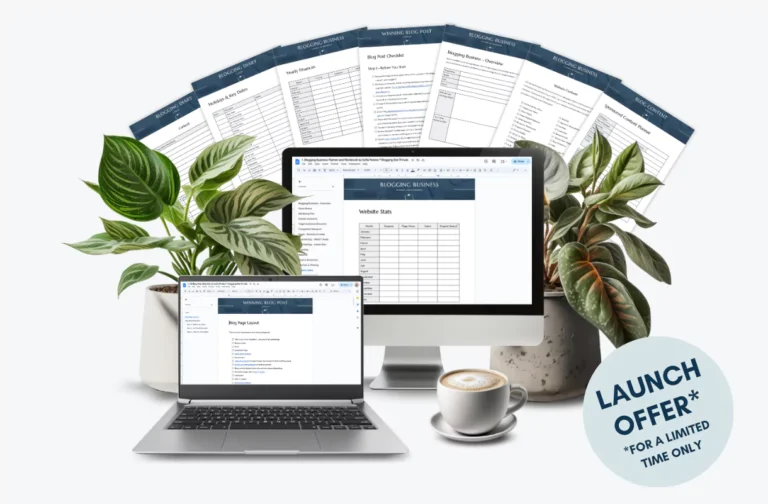
Before you go, don’t forget to grab the freebies that Lucrezia, Lisa and Lidiya were so kind to share:
P.S. Did you notice their names all start with “L”, for “Language”? It wasn’t on purpose, but they really were the perfect guests for this post, wouldn’t you agree? 🙃





I’m Dutch and have an English blog for all those reasons mentioned. Bigger audience, larger reach. And to be fair it’s easier for me to read English than it is to read Dutch!
Same!! With so much English content all around, it gets easier to discuss topics in English when all you read online about those same topics is in English too. I am Portuguese, living in Spain, and when I started my Master’s in WordPress and Digital Marketing I was in The Netherlands attending a Spanish school online. I could never learn all the terms in Spanish and I ended up answering my exam in English ahah
Interesting blog post! I only speak English and I had a hard enough time learning that, so anyone who can speak more than one language impresses me! Thanks for your investigation and this thorough post on this subject.
Hi Catherine! Thanks for your comment 🙂 As a not native English speaker, I definitely struggled to decide whether blogging in English was my best bet. But after living abroad for so long, it is definitely rewarding to be able to connect with more people. English is the language of the internet, and 99% of what I consume online myself is in English. Sometimes I wonder if native speakers even notice, or if they mind the occasional mistake. But I couldn’t be happier to have taken the leap!
This was such a great read! And really touches my blogging life. I am Portuguese but I live in London. Similarly with Lucrezia, Lisa and Lidiya I write in English but I also translate to Portuguese – I want to reach majority of people that want to travel and get new perspectives but also Portuguese and Brazilian market that sometimes want to read in Portuguese for better understanding.